
The Quick Fix Most People Try First—and Why It Backfires
When a garage door starts down and then jerks back up, or refuses to close at all, the first instinct for a lot of homeowners is to find the force adjustment dial on the opener and crank it higher. It's tempting because it's right there on the motor unit, it doesn't require tools, and nine times out of ten it makes the door close on the next try. The problem is that dial controls the opener's safety reversal system—the mechanism that's supposed to stop and reverse the door if it senses an obstruction, like a foot, a pet, or a box left in the path. Turning up the force doesn't fix whatever is actually causing the resistance or false reversal; it just tells the opener to push through it. That can mean a door coming down on something it should have stopped for, or it can mean the motor and gears fighting a mechanical problem every single cycle, which wears them out faster.
What the Symptoms Usually Look Like
Before getting into causes, it helps to know which pattern you're dealing with, since each one points in a slightly different direction:
- Reverses right before touching the floor: the door goes down, nearly closes, then pops back up a few inches from the ground.
- Reverses partway down: the door only gets halfway or a third of the way closed before heading back up.
- Won't move at all when closing: you press the button, the opener light blinks a set number of times, but the door never starts down.
- Closes fine with the wall button but not the remote (or vice versa), which usually points somewhere other than the sensors.
Hold onto which of these matches your door—it's useful information if you end up calling for service.
Where a Technician Actually Starts Looking
1. The Photo-Eye Sensors
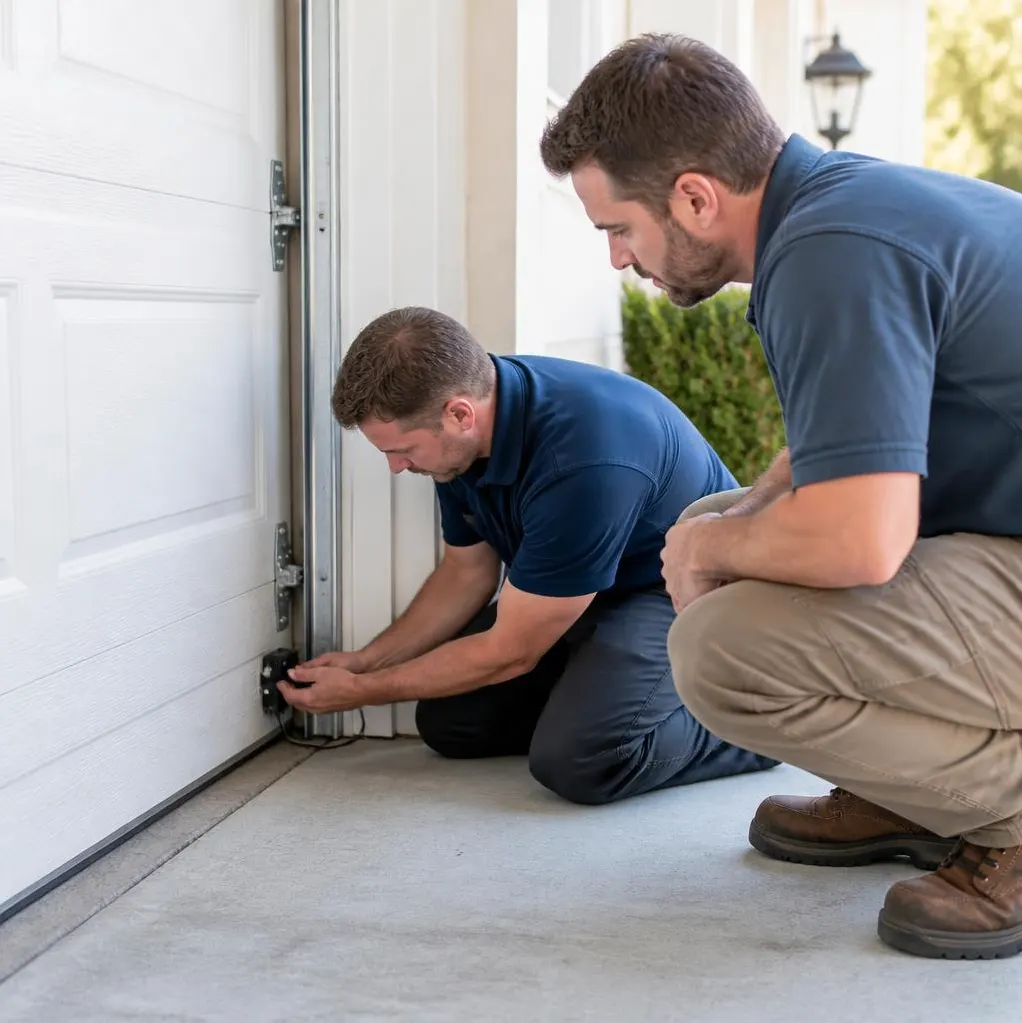
These two small sensors sit a few inches off the ground on either side of the door track and send an invisible beam across the opening. If anything blocks that beam, or if the sensors aren't aimed at each other precisely, the door will refuse to close or will reverse immediately. In this part of Indiana, the sensors take a beating from seasonal swings: condensation and frost can form on the lenses on cold mornings, low winter sun can blind one sensor in the afternoon, and road salt tracked in on tires or boots builds up a film on the lens over a season. The fix is usually wiping both lenses clean with a soft cloth and checking that the indicator light on each sensor is solid, not blinking. If they're solid but the door still won't close, the sensors may be knocked slightly out of alignment and need to be loosened and re-aimed.
2. Something Blocking the Path
Next is a physical check of the door's full travel path, including things that are easy to miss: a chunk of ice built up on the floor track from melting snow, leaves or debris in the track channel, or a hose, bike, or storage bin that's crept into the swing area. Ice is a particularly common culprit from late fall through early spring, since meltwater refreezes right where the door seals against the slab.
3. Track Alignment and Rollers
If the sensors are clean and the path is clear, the next stop is the track itself. A bent section of track, a roller worn flat, or hinges that have loosened over years of temperature swings can all cause the door to bind at a certain point, which the opener misreads as an obstruction. This is more common on older doors or ones that have taken a hit from a vehicle or ladder.
4. Spring Tension
A door with a weakening torsion or extension spring gets heavier for the opener to manage as it travels. If the opener has to work harder than it's calibrated for, it can trip the safety reversal even with nothing in the way. This usually shows up gradually—doors get a little slower and a little louder before they start refusing to close altogether.
5. The Opener's Limit and Logic Settings
Last on the list, because it's the least likely cause but still possible, is the opener's travel limit setting or an aging circuit board. If the limits are set wrong, the opener may think the door has hit the floor before it actually has, causing it to stop short or reverse. Boards that are several years old can also start misreading normal resistance as an obstruction, especially as temperatures swing between humid summers and cold winters.
When to Call Wolcottville Garage Door
If you've wiped the sensors, cleared the track, and the door still won't close—or if you can see a spring that looks stretched, gapped, or has visibly shifted—it's time to stop troubleshooting and call it in. Our technicians check sensors, track, and spring tension in one visit, and we handle both spring replacement and garage door opener repair so the whole system gets looked at, not just one part. Springs under tension aren't a safe DIY repair, and a door reversing due to spring failure tends to get worse quickly, not better.
If your garage door in Wolcottville, LaGrange, Kendallville, or anywhere around LaGrange County is giving you trouble closing, give Wolcottville Garage Door a call. We'll find the actual cause and get it closing the way it should before winter weather makes it worse.